
For professional lash artists, few challenges are as frustrating—or as costly—as inconsistent adhesive performance. One day, retention is flawless; the next, lashes shed prematurely with no clear explanation. In most cases, the root cause isn’t technique or product age—it’s humidity. Understanding how humidity affects eyelash glue and learning how to choose a humidity-resistant glue is essential for achieving stable, predictable results in any environment.
This guide is written strictly for professionals and focuses on selecting lash adhesive that performs reliably across a wide range of humidity levels while protecting your reputation, your time, and your clients’ trust.
Why Humidity Affects Lash Glue
Most eyelash glue used in professional lash extensions is based on cyanoacrylate chemistry. This ingredient cures through a reaction with moisture in the air. While a certain amount of humidity is necessary for proper bonding, too much or too little moisture disrupts the curing process
Low humidity (below ~35%) slows polymerization. The adhesive cures too slowly, leading to weak bonds, slipping extensions, and poor retention.
High humidity (above ~65% causes the glue to cure too quickly. This results in surface curing before proper bonding, brittle attachment points, and increased shock curing.
When lash artists experience unexplained retention issues, inconsistent humidity is often the invisible factor. Without a glue formulated to tolerate fluctuations, even perfect isolation and placement won’t compensate.
Types of Humidity-Friendly Adhesives
Not all lash adhesive formulas are designed to perform across variable conditions. Understanding the main categories helps narrow your choice.
Wide-Range (Universal) Adhesives
These are commonly referred to as humidity resistant glue. They are engineered to perform within a broader humidity window—typically around 30–75%. This makes them ideal for studios without full climate control or for artists who travel, teach, or work in different regions.
Adaptive-Speed Adhesives
Some professional lash products are designed with stabilizers that adjust curing speed based on ambient moisture. They don’t fully eliminate humidity influence, but they reduce extremes and provide more predictable bonding.
Climate-Specific Adhesives
These glues are optimized for either high or low humidity environments. While effective in controlled conditions, they are less forgiving and can fail quickly if humidity shifts during the day.
For most professionals, especially those managing multiple clients daily, a true universal eyelash glue offers the best balance of consistency and flexibility.
Key Features to Look for in a Universal Glue
When evaluating a lash adhesive that claims to work “in any humidity,” look beyond marketing language and focus on measurable characteristics.
- Broad Humidity Range
A professional-grade glue should clearly state its operational humidity window. Aim for a formula that performs reliably in both moderate and slightly extreme conditions. This reduces the need to constantly switch adhesives as weather changes.
- Stable Cure Time
Humidity-resistant formulas maintain consistent curing speed even when moisture levels fluctuate. This ensures predictable pickup, placement, and bonding—critical for both classic and volume work.
- Elastic Bond After Curing
A quality eyelash glue should remain slightly flexible once cured. Brittle bonds are more likely to snap under daily stress, especially in high humidity environments.
- Low Shock-Curing Sensitivity
High humidity can cause shock curing, leading to micro-crystallization at the bond point. Advanced professional lash products include stabilizers that minimize this reaction, improving comfort and retention.
- Clean, Controlled Polymerization
Look for adhesives that cure evenly rather than forming a “skin” on the outside. Uniform curing improves attachment strength and reduces premature shedding.
Mistakes to Avoid When Choosing Glue
Even experienced lash artists can sabotage retention by making avoidable mistakes when selecting lash adhesive.
– Relying Only on Drying Speed
Fast glue does not equal humidity resistance. Many ultra-fast adhesives perform well only within a narrow humidity band and fail outside it.
– Ignoring Seasonal Changes
Using the same eyelash glue year-round without reassessing environmental conditions is a common cause of retention issues. A universal glue minimizes this risk, but awareness is still essential.
– Overcorrecting with Boosters or Accelerators
Excessive use of bonder, nano misting, or accelerators can worsen curing imbalance when humidity is already high. The glue should do the work—not the add-ons.
– Using One Glue for Every Technique Without Testing
Volume, mega volume, and classic applications place different demands on lash adhesive. Even a humidity resistant glue should be tested with your specific techniques.
Best Practices for Stable Retention
Choosing the right glue is only half the equation. Professional results require consistent working conditions and disciplined handling.
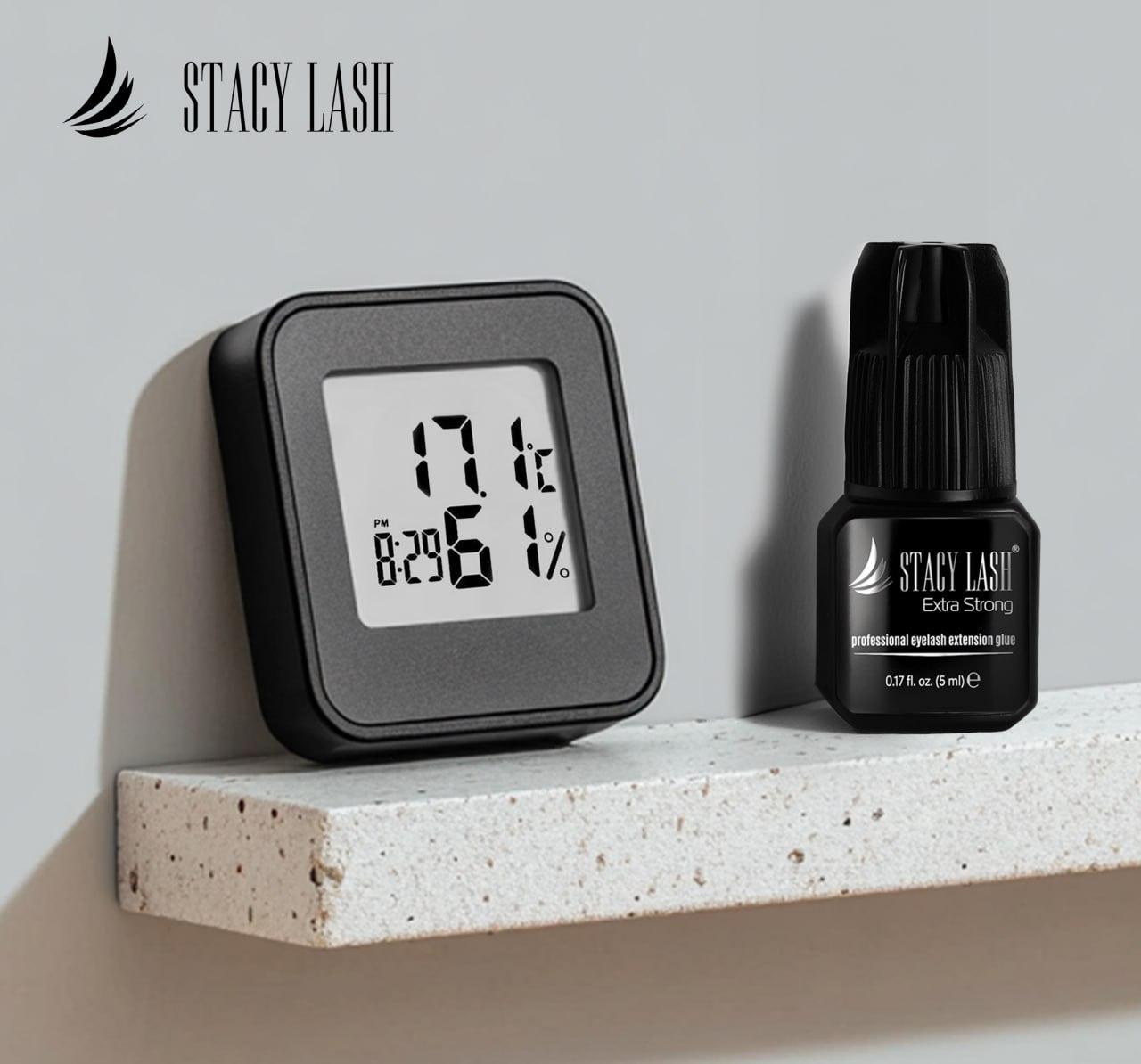
– Monitor Humidity and Temperature. Always use a digital hygrometer at lash-bed level—not across the room. Even the best eyelash glue performs best when you understand your environment.
– Store Adhesive Correctly. Improper storage causes premature thickening and instability. Keep lash adhesive sealed, upright, and away from light and heat. Replace bottles regularly, even if they appear usable.
– Shake Properly and Consistently. Incomplete mixing leads to uneven polymer distribution, which directly impacts performance in variable humidity.
– Refresh Drops Strategically. In changing humidity, adhesive behavior can shift within minutes. Refresh glue drops proactively rather than waiting for performance to decline.
– Adjust Technique—Not Just Products. In higher humidity, slightly faster placement and reduced adhesive quantity can improve bonding. In lower humidity, allow for a fractionally longer attachment time without flooding the base.
Final Thoughts
There is no such thing as a truly “humidity-proof” adhesive—but there are professional lash products engineered to perform reliably across real-world conditions. By understanding how humidity affects eyelash glue, selecting a true humidity resistant glue, and avoiding common mistakes, lash artists can dramatically reduce retention issues.
A universal lash adhesive isn’t about convenience—it’s about control. Control over your results, your schedule, and your professional reputation. When your glue works with you instead of against the environment, consistency becomes the standard—not the exception.
