
Choosing a meeting table involves more than comparing size and appearance. Furniture should suit the work performed in the room, the number of participants, and the equipment they use. Office meetings often involve quick discussions and daily planning, while dedicated meeting rooms may host presentations, supplier reviews, or formal negotiations. These differences influence table dimensions, seating arrangements, cable access, and material selection.
The distinction is not absolute. Some offices use one table for several purposes, while meeting rooms may also support everyday teamwork. Buyers should assess the room layout and working habits before choosing furniture. A conference room table may suit a dedicated discussion space, but its size and features must still match actual requirements.
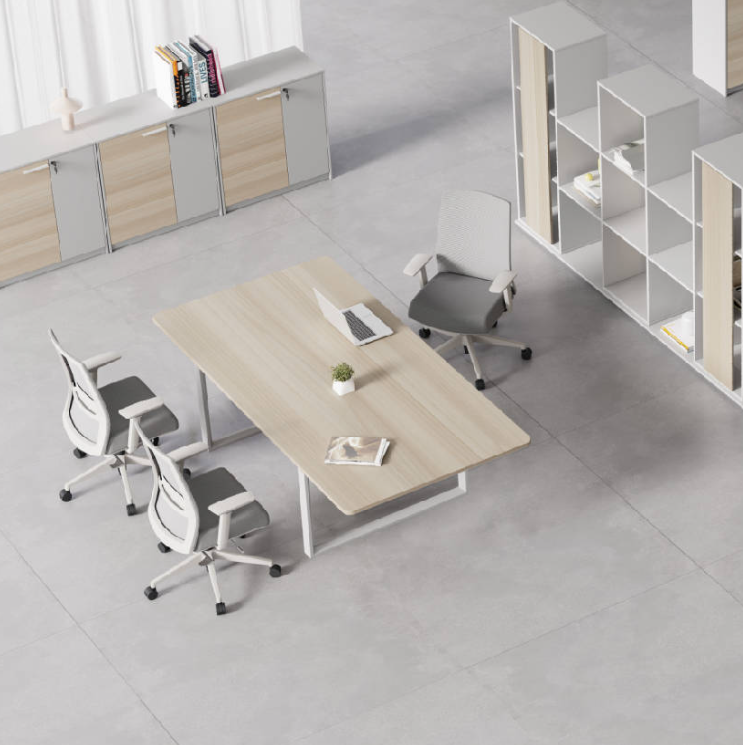
Office Tables Must Adapt to Daily Tasks
Office meetings often involve small teams, project updates, and brief discussions. Compact rectangular tables can preserve walking space while accommodating laptops, notebooks, and documents. In smaller offices, the table may also need to fit beside existing desks or storage units.
Shared office tables often support several activities throughout the day. Employees might use them for morning planning and later review documents or work on projects together. Buyers should consider whether the furniture needs to move between activities. Easy rearrangement can be useful, provided the table remains stable during normal use.
Meeting Rooms Need a Clearer Layout
Standard meeting rooms are generally arranged around planned group activities. Table dimensions should reflect expected attendance, door positions, display placement, and the space needed to move chairs. Choosing a larger surface without checking circulation space may make the room uncomfortable.
Formal rooms also benefit from coordinated furniture. Table finishes should work with chairs, storage units, and presentation equipment. Consistent specifications can be particularly useful for government offices, educational institutions, hospitals, and large enterprises that furnish several rooms.
Table shape influences communication, too. Rectangular designs suit structured discussions, while oval or boat-shaped options may improve sightlines in certain layouts. When evaluating a conference room table, procurement teams should consider where participants sit, where displays are positioned, and how documents are shared.
Equipment Access Changes the Requirements
The functional difference between office and meeting room tables depends on their intended use. Office furniture may need to support changing tasks in limited space. Dedicated meeting room furniture may prioritize participant capacity, presentation equipment, and a consistent arrangement. Neither category is automatically more practical.
Cable management matters in both settings. Laptops, monitors, and chargers can leave wires spread across the surface. Built-in cable access helps organize connections and preserve working space. Buyers should check the positions of wall outlets and floor boxes before confirming the table layout.
Structural support deserves equal attention. The tabletop, legs, and under-desk beams contribute to stability. Buyers should assess the complete construction rather than judge strength by appearance alone. Cleaning requirements and access beneath the table also affect routine maintenance.
Material Choices Affect Everyday Maintenance
Melamine-finished particle board provides a finished surface for regular workplace use. Buyers should check the board grade, edge treatment, and cleaning instructions before comparing quotations. These details help facilities teams maintain the furniture without damaging its finish.
Metal frames require careful specification as well. Leg dimensions, material thickness, and connecting beams all influence the overall structure. Procurement teams should compare these details with the intended table size and usage requirements instead of relying on one specification as the sole measure of quality.
Organizations purchasing furniture for several locations may benefit from consistent materials and specifications. However, one design may not suit every room. Available space, meeting frequency, equipment needs, and budget should determine the final choice.
Product Features Illustrate Practical Design
The NOVA meeting table #30 combines an E0-grade particle board tabletop with a melamine finish and cold-rolled steel support components. Its specifications give buyers concrete details to review when comparing furniture for offices and meeting spaces. Final suitability depends on the required dimensions and room arrangement.
The table legs use cold-rolled steel measuring 70 × 40 × 1.2 mm. Its under-desk beam uses heavy-duty cold-rolled steel measuring 38 × 38 × 1.2 mm. These measurements help procurement teams evaluate the construction against project requirements.
Cable organization is another consideration. The built-in cable box helps reduce clutter and maintain an organized workspace. Leadcom seating offers furniture solutions for professional environments and integrates several manufacturing processes, including metal processing, injection molding, PU foam production, and wood processing. Buyers can assess these capabilities alongside product specifications and project requirements.
Procurement Decisions Should Follow the Room Plan
Before requesting quotations, measure the room, mark walking routes, and estimate the usual number of participants. Record the equipment used during meetings and identify display positions, outlets, and floor boxes. These checks help determine suitable dimensions, shapes, and cable arrangements before appearance becomes the main consideration.
Next, prepare a specification sheet covering tabletop material, frame construction, cable management, finish, and maintenance. For multi-site projects, review delivery arrangements, installation requirements, warranty coverage, and after-sales support. According to the supplied company information, Leadcom seating offers a five-year warranty and an eight-part VIP service system. Buyers should confirm the applicable terms for their order.
The final choice should reflect how the room operates. Flexible office areas may require adaptable layouts, while dedicated meeting rooms may prioritize presentation and group communication. A suitable conference room table balances seating space, equipment access, structural support, and maintenance needs. Comparing these factors helps procurement teams select furniture according to practical requirements rather than appearance alone.
