
High-flow irrigation systems must deliver sufficient water across large agricultural areas while adapting to changing solar power. Pump capacity alone cannot determine performance. Pipeline resistance, motor speed, water pressure, and photovoltaic output also affect daily operation. Poorly matched equipment may cause unstable flow or frequent interruptions during irrigation.
Selecting suitable solar inverter solutions requires careful evaluation of hydraulic conditions and motor requirements. Proper inverter tuning can improve water delivery and reduce unnecessary energy consumption. Understanding the relationship between pump performance and inverter control helps agricultural contractors plan more practical installations.
Understanding High-Flow Pumping Requirements
High-flow irrigation applications often involve large farmland, agricultural reservoirs, and extensive water distribution networks. These projects require careful calculations because water demand changes with crop type, irrigation method, and operating schedule. Pump selection should reflect actual field conditions rather than relying only on rated motor power.
Flow rate and pumping head are two important parameters. Flow rate indicates the volume of water delivered within a given period. Pumping head represents the pressure required to overcome elevation differences and pipeline resistance. Increasing flow may require additional power, particularly in systems with long pipelines.
For a solar irrigation system, engineers should calculate daily water consumption and identify peak irrigation periods. They also need to consider seasonal sunlight availability. These factors influence pump capacity, photovoltaic array sizing, and inverter operating requirements.
Matching Inverter Settings with Motor Performance
Motor specifications provide the foundation for inverter configuration. Rated voltage, current, frequency, and power should match the selected equipment. Incorrect parameter settings may cause unstable operation, excessive current, or reduced pumping capacity during demanding irrigation periods.
The pump performance curve provides additional guidance. It shows how flow rate, head, and efficiency change under different operating conditions. Engineers can use this information to identify suitable motor speeds without exceeding the pump’s recommended operating range.
When evaluating a solar inverter manufacturer, contractors should examine supported motor types, electrical ratings, and available control functions. Technical documentation also helps determine whether the inverter can accommodate changing loads and the operating conditions of agricultural pumping installations.
MPPT Control Under Changing Sunlight
Solar-powered pumps experience fluctuations in available energy throughout the day. Cloud cover, panel temperature, and changing sunlight intensity influence photovoltaic output. These variations affect motor speed and water delivery, especially when irrigation systems operate without battery storage.
Maximum Power Point Tracking (MPPT) helps the inverter adjust photovoltaic operating conditions to obtain usable power. The inverter then regulates motor frequency according to available energy. This coordination allows pumping performance to respond to changing solar input.
During strong sunlight, the motor may operate at a higher frequency within configured limits. Under weaker sunlight, the inverter can reduce frequency to match available power. However, lower motor speeds also affect pump head and flow, so hydraulic requirements remain important.
Equipment Features That Support Pump Control
After identifying electrical and hydraulic requirements, contractors can compare inverter functions that support agricultural pumping. Motor compatibility, power supply arrangements, and protection functions are relevant considerations. These features influence installation planning and equipment operation under changing conditions.
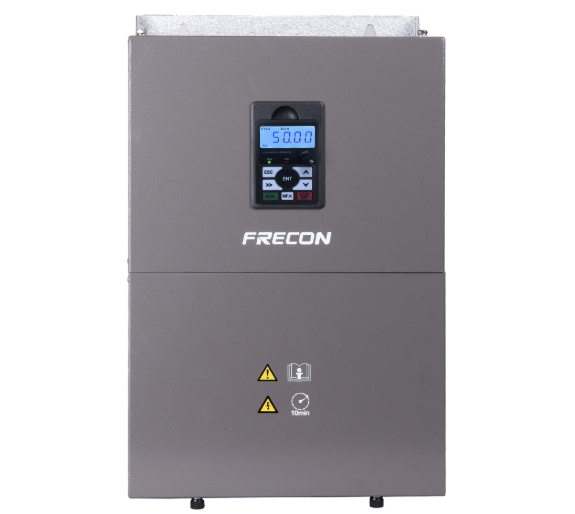
FRECON offers the PV150A Series Solar Water Pump Inverter for solar pumping applications. This MPPT-based variable frequency drive supports hybrid power supply, battery-free operation, and built-in protection functions. Its advanced MPPT algorithms are designed to improve photovoltaic energy utilization and support water delivery.
The PV150A series supports asynchronous motors (AM), permanent magnet synchronous motors (PMSM), and brushless DC motors (BLDC). This compatibility provides options for different pump configurations. Contractors should still verify motor ratings and electrical requirements before selecting equipment for high-flow applications.
Field Testing and Frequency Adjustment
Commissioning should begin with electrical and mechanical inspections. Technicians need to check photovoltaic connections, motor wiring, grounding, pipeline valves, and filters. These inspections help identify installation problems before the pumping system begins regular operation.
Motor parameters should then be entered according to the nameplate information. Acceleration time, operating frequency limits, and current protection require careful adjustment. Gradual acceleration can reduce sudden pressure changes during startup and limit mechanical stress on pumping equipment.
Flow and pressure measurements provide practical feedback during tuning. Technicians can record water output at different operating frequencies and compare the results with the pump curve. If flow remains insufficient, they should examine solar input, pumping head, and pipeline resistance before increasing motor speed.
For high-flow solar inverter solutions, testing under different sunlight conditions is useful. Recording inverter frequency, motor current, and delivered water volume helps operators understand system behavior. These records also provide reference information for later adjustments.
Maintaining Performance During Agricultural Operation
Long-term operation requires periodic inspection of electrical connections, inverter ventilation, and pumping equipment. Dust accumulation, loose wiring, and changes in water source conditions may influence performance. Maintenance records help technicians identify recurring operating problems.
When expanding a solar irrigation system, contractors should review pipeline capacity and available photovoltaic power. Increasing pump speed does not necessarily produce proportional flow gains. Hydraulic restrictions and additional pressure losses may limit the improvement.
As a solar inverter manufacturer, FRECON provides products such as the PV150A series for agricultural pumping applications. Its motor compatibility and control functions can be considered alongside project requirements when contractors evaluate equipment for installation or system adjustments.
Practical Priorities for Consistent Water Delivery
High-flow irrigation tuning depends on accurate hydraulic calculations, suitable motor parameters, and measured operating results. Inverter frequency should be adjusted according to pump characteristics, available solar energy, and required water pressure.
Rather than increasing speed whenever water output declines, operators should identify the actual cause. Regular measurements and careful parameter adjustments can support more consistent irrigation performance while keeping equipment operation aligned with field conditions.
