
A 500-pound gazebo may seem heavy enough to remain stable outdoors, especially when installed on a concrete patio. However, weight alone does not guarantee stability when strong winds arrive. For homeowners considering large hardtop gazebos, understanding wind uplift, anchoring methods, and concrete slab edge distance is essential to creating a safer and more reliable outdoor living space.
A 12×20 gazebo provides generous room for outdoor dining, entertaining, and relaxing. Yet its large roof also creates a surface that wind can push against and lift. Before installing an outdoor hardtop gazebo, it is important to understand why concrete anchors matter, how they help resist wind forces, and what to consider when choosing an installation location.
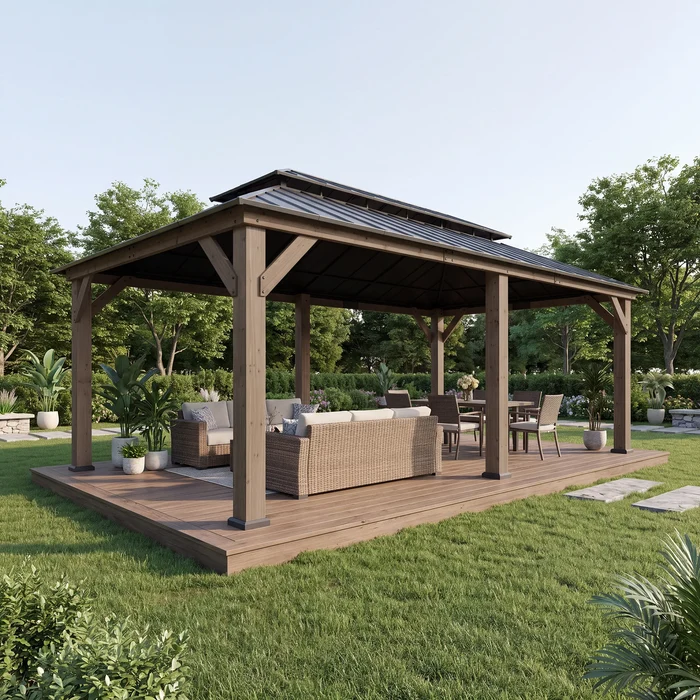
Why a 500-Pound Gazebo Can Still Move in Strong Winds
A gazebo’s weight helps resist movement, but wind introduces forces that are not limited to horizontal pushing. When air flows around and beneath a roof, pressure differences can create an upward force known as wind uplift. This force may attempt to lift the roof and pull the supporting frame away from its foundation.
A 12×20 gazebo has a roof footprint of approximately 240 square feet. Even when a hardtop roof is made from durable materials, its broad surface can experience considerable wind pressure. The actual uplift force depends on wind speed, roof geometry, exposure, and other site-specific conditions.
This is why a heavy structure should not rely on gravity alone. If wind forces exceed the resistance provided by the gazebo’s weight and friction, its legs may shift or lift. Proper anchoring creates a mechanical connection between the gazebo frame and the supporting surface, helping the structure resist movement.
For homeowners exploring SUNJOY hardtop gazebos, the key consideration is not simply how much the structure weighs, but whether the entire installation system is appropriate for the expected conditions.
Do You Have to Bolt a Heavy Gazebo to Concrete?
When installing a gazebo on a concrete patio, anchoring is generally an important part of securing the structure. A heavy frame does not eliminate the need for suitable fasteners, particularly when the gazebo has a large roof exposed to changing weather.
Concrete anchors connect the gazebo’s base plates to the slab, helping resist sliding, overturning, and uplift. However, not every anchor is suitable for every application. The correct type depends on factors such as the concrete’s thickness and condition, anchor specifications, installation requirements, and expected loads.
Before drilling, check the gazebo manufacturer’s installation instructions to confirm the recommended anchoring method and hardware. If the included hardware is intended for a different surface, do not assume it is suitable for concrete without verifying compatibility.
It is equally important to inspect the slab. Cracked, deteriorated, or unusually thin concrete may not provide adequate holding strength. Where the installation involves a large structure or challenging wind exposure, a qualified professional can help assess the foundation and anchoring requirements.
Why Concrete Slab Edge Distance Matters
Even the right anchor can perform poorly if it is installed too close to the edge of a concrete slab. Anchor placement is therefore an important consideration when positioning a 12×20 outdoor hardtop gazebo.
When an anchor is loaded, it transfers force into the surrounding concrete. If it is too close to an edge, the concrete may crack or break away under tension. This can reduce the anchor’s ability to hold the gazebo securely, particularly when wind uplift places repeated stress on the connection.
The required edge distance varies according to the anchor type, diameter, embedment depth, concrete properties, and applied loads. There is no single measurement that works for every gazebo installation.
Before assembling the structure, measure the slab and plan where each gazebo leg will sit. Confirm that the anchor locations meet the applicable manufacturer requirements and the anchor manufacturer’s specifications. If the slab is too narrow or the legs must sit near an edge, consider a different location or seek professional guidance before drilling.
Planning these details in advance can help prevent installation problems that are difficult to correct after the gazebo is assembled.
Choosing the Right Foundation for Hardtop Gazebos
A suitable foundation should support the gazebo’s weight while providing reliable resistance to the forces it may experience outdoors. A sound concrete slab can be a practical option, but its suitability depends on its design, condition, thickness, and reinforcement.
Homeowners should also consider the surrounding environment. Open yards, exposed patios, and locations between buildings can experience different wind conditions. Roof design, nearby structures, and local weather patterns all influence the forces acting on a gazebo.
SUNJOY offers a range of hardtop gazebos designed for outdoor living. When comparing models, review the product specifications, assembly instructions, and anchoring guidance before choosing a location. These details help ensure that the gazebo and its foundation are considered together rather than as separate decisions.
Build a More Secure Outdoor Living Space With SUNJOY
A 500-pound 12×20 gazebo may look substantial, but its weight cannot replace proper anchoring. Wind uplift can place significant stress on a large roof, while insufficient concrete slab edge distance can weaken the connection between the structure and its foundation.
By checking the slab’s condition, planning anchor placement, following installation specifications, and accounting for local wind exposure, homeowners can make more informed decisions about their outdoor space.
Explore the SUNJOY hardtop gazebo collection to find a design that suits your patio and outdoor living needs. With careful product selection and a properly planned installation, your gazebo can become a more dependable setting for outdoor dining, family gatherings, and everyday relaxation.
